
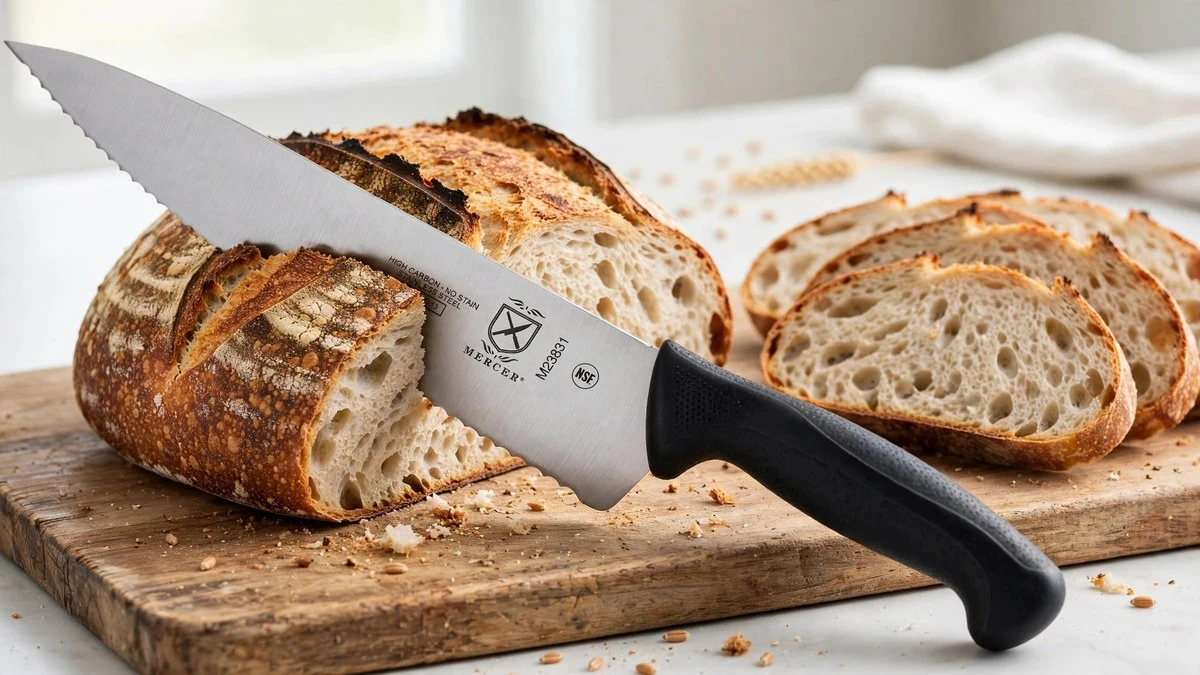
A good bread knife should saw through a hard crust without pressing down on the crumb, and that balance is what separates a useful serrated blade from a frustrating one. This guide compares seven serrated options for crusty sourdough, soft sandwich loaves, and delicate cakes, so you can match length, edge style, and handle shape to the bread you bake or buy most often.
This is a research-based comparison drawn from published specifications, maker descriptions, and independent reviews, not a hands-on test in our kitchen. Prices change often, so treat every price band below as a guide and check the current listing before you buy. As an Amazon Associate, we earn from qualifying purchases.
Start with a stable surface, too. A board that slides will undo good technique, so see our best cutting board picks for kitchens before you slice a tall loaf.
Quick Look
- Victorinox Fibrox 10.25-Inch Bread Knife, Best for: everyday sourdough and wide loaves.
- Mercer Culinary Millennia 10-Inch Wide Wavy Edge, Best for: straight, confident cuts on a budget.
- Wusthof Classic 9-Inch Double-Serrated, Best for: a dependable premium all-rounder.
- Shun Classic 9-Inch, Best for: a beautiful splurge for keen home bakers.
- Tojiro F-687 Bread Slicer, Best for: large sourdough boules and tall loaves.
- Mercer Culinary Millennia 9-Inch Offset, Best for: sandwiches and level cuts on a standard board.
- Global G-9 Bread Knife, Best for: precise crust cutting in a premium, easy-clean design.
How We Picked
We compared blade length, serration style, blade material, handle comfort, balance, ease of care, and price band. A longer blade suits wide boules, while a nine-inch blade is easier to control for sandwiches and cakes. We also favored handles that stay secure with damp or flour-dusted hands.
We gave extra weight to knives that can handle more than bread, including tomatoes and soft cakes, because most kitchens do not need a single-use blade. If your kitchen still needs a daily workhorse, see our best chef knife under 50 guide, and our best knife sharpener picks explain how serrated edges are maintained.
Victorinox Fibrox 10.25-Inch Bread Knife (Best Overall)
This long, light blade glides through wide sourdough boules in fewer strokes, which helps keep slices even from crust to center. The serrations bite without tearing, and the grippy handle stays secure when your hands are damp or dusted with flour.
- Blade: High-carbon stainless steel.
- Length: 10.25 inches.
- Edge: Serrated.
- Handle: Fibrox, slip-resistant.
- Care: Hand wash and dry.
- Price band: Budget.
- Who it’s for: Home bakers who slice large sourdough loaves often.
- Who should skip: Cooks with small boards or limited storage space.
- Pros: Long reach, secure grip, and easy control for wide loaves.
- Cons: The length can feel awkward on a compact board.
Mercer Culinary Millennia 10-Inch Wide Wavy Edge (Best Value)
The wide blade acts like a small guide as it moves through a loaf, which can help newer slicers keep cuts straight. Its wavy edge grips crust well, while the light handle keeps long slicing sessions from feeling tiring.
- Blade: Japanese stainless steel.
- Length: 10 inches.
- Edge: Wavy serrated.
- Handle: Textured polypropylene.
- Care: Hand wash and dry.
- Price band: Budget.
- Who it’s for: Budget buyers who want a wide, forgiving blade.
- Who should skip: Cooks who prefer a slim blade for small loaves.
- Pros: Stable wide blade, strong crust grip, and low cost.
- Cons: The wide blade takes more board space.
Wusthof Classic 9-Inch Double-Serrated (Best Premium)
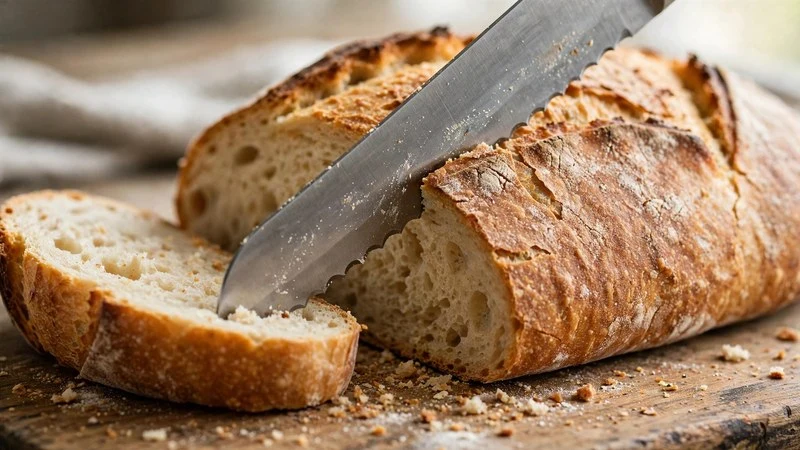
A forged blade with a double-serrated edge moves through hard crust with steady, even pressure, and the full tang gives it a balanced feel in the hand. It is a strong choice when you want one dependable knife for bread, tomatoes, and layer cakes.
- Blade: High-carbon stainless steel, forged.
- Length: 9 inches.
- Edge: Double-serrated.
- Handle: Triple-riveted, full tang.
- Care: Hand wash and dry.
- Price band: Premium.
- Who it’s for: Cooks who want one premium knife for many cutting jobs.
- Who should skip: Buyers who only slice very wide boules.
- Pros: Balanced feel, durable build, and clean crust cuts.
- Cons: Heavier and pricier than budget serrated knives.
Shun Classic 9-Inch (Best Splurge)
The Shun pairs a sharp serrated edge with a beautiful Damascus-style blade and a smooth Pakkawood handle. It slices crust cleanly while looking like a showpiece, but it deserves careful hand washing and storage to protect the edge and finish.
- Blade: VG-MAX steel with Damascus cladding.
- Length: 9 inches.
- Edge: Serrated.
- Handle: Pakkawood, D-shaped.
- Care: Hand wash and dry.
- Price band: Splurge.
- Who it’s for: Keen home bakers who want a premium, beautiful knife.
- Who should skip: Cooks who want a low-care, everyday beater knife.
- Pros: Sharp serrations, comfortable handle, and striking finish.
- Cons: Needs careful care and a higher budget.
Tojiro F-687 Bread Slicer (Best for Large Sourdough)
This extra-long Japanese slicer is made for wide, tall loaves that shorter blades cannot cross in one pass. The slim profile moves with little drag, so slices stay thin and even, even when the crust is thick and firm.
- Blade: Molybdenum vanadium stainless steel.
- Length: 10.6 inches (270 mm).
- Edge: Serrated.
- Handle: Black, riveted.
- Care: Hand wash and dry.
- Price band: Midrange.
- Who it’s for: Sourdough bakers with wide, tall boules.
- Who should skip: Cooks with small boards or mostly sandwich loaves.
- Pros: Long reach, slim profile, and even thin slices.
- Cons: Length needs storage space and a large board.
Mercer Culinary Millennia 9-Inch Offset (Best for Sandwiches)
The offset handle lifts your knuckles clear of the board, so you can finish each cut without lifting or tilting the loaf. At nine inches, it is long enough for most sandwich loaves while staying easy to control on a standard board.
- Blade: Japanese stainless steel.
- Length: 9 inches.
- Edge: Wavy serrated.
- Handle: Offset, textured polypropylene.
- Care: Hand wash and dry.
- Price band: Budget.
- Who it’s for: Sandwich makers and cooks who want level, knuckle-clear cuts.
- Who should skip: Bakers who mainly slice very wide sourdough boules.
- Pros: Comfortable offset grip, easy control, and low cost.
- Cons: Shorter reach than the ten-inch options above.
Global G-9 Bread Knife (Best Premium Crust Cutter)
Global’s slim, sharply serrated blade cuts crust with a light, precise feel, and the seamless steel handle is easy to wipe clean. At just under nine inches, it suits medium loaves, tomatoes, and cakes, but very wide boules may need more reach.
- Blade: Cromova 18 stainless steel.
- Length: 8.75 inches (22 cm).
- Edge: Serrated.
- Handle: Seamless stainless steel.
- Care: Hand wash and dry.
- Price band: Premium.
- Who it’s for: Cooks who want a precise, easy-clean premium cutter.
- Who should skip: Bakers who mainly slice very wide sourdough boules.
- Pros: Precise feel, clean design, and sharp serrations.
- Cons: Shorter reach and a smooth handle that some hands may find slippery.
Buying Guide
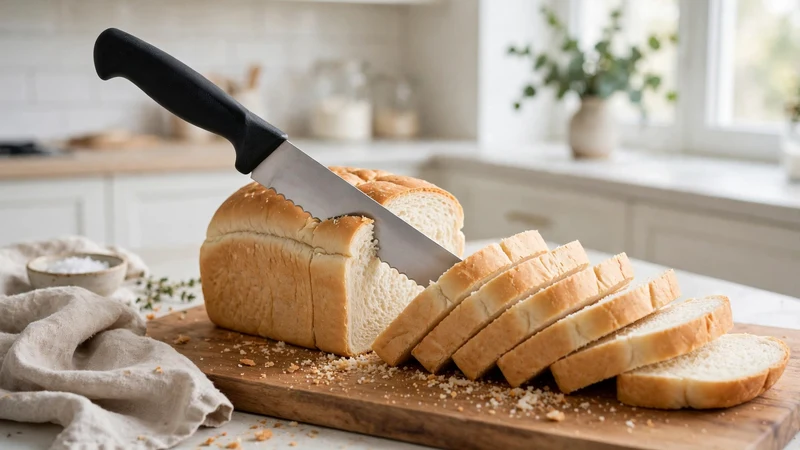
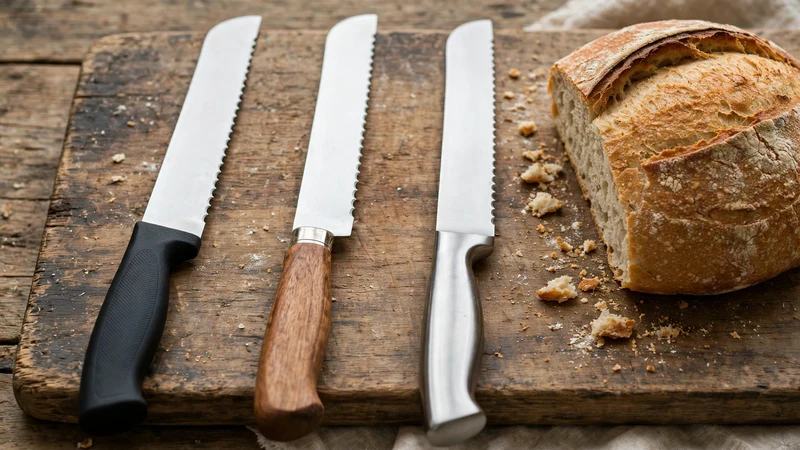
Start with length. Measure your widest loaf, then choose a blade that can cross it with a little room to spare. A nine-inch blade covers most sandwich loaves, while a ten-inch or longer blade is better for wide sourdough boules and tall cakes.
Next, look at the edge and handle. Pointed serrations bite hard crust quickly, while wavy edges can feel smoother on soft bread. A handle that fills your hand without slipping matters more than a fancy finish, especially when the blade is long.
For a second opinion on serration styles, see the Serious Eats guide to the best bread knives, which explains why tooth shape and blade length matter for crusty loaves. Care is simple. Hand wash, dry right away, and store the blade in a block, sheath, or slot so the serrations stay sharp.
The Verdict
For most kitchens, the Victorinox Fibrox 10.25-Inch Bread Knife is the best place to start, because it combines long reach, a secure grip, and a budget price band. If you want to spend less, the Mercer Culinary Millennia 10-Inch Wide Wavy Edge is a strong value pick.
Choose the Tojiro F-687 for very large sourdough, the Mercer offset for sandwiches, and the Shun or Global when a premium finish matters most. Whichever you choose, let the serrations do the work, use light pressure, and keep the blade clean and dry.
Frequently Asked Questions
If you want a full set, our best knife set picks for small kitchens are a good next read. For everyday prep, our best vegetable peeler picks for small kitchens make quick work of vegetables. For rinsing, our best colander picks for small kitchens and apartments suit a small sink. For salads, our best salad spinner picks for small kitchens are worth a look. For mixing, our best nesting mixing bowls for small kitchens keep the cupboard tidy.
What length bread knife should I buy?
Measure your widest loaf first, then choose a blade a little longer than that width. A 9 inch blade suits most sandwich loaves and smaller sourdough, while a 10 inch or longer blade crosses wide boules in fewer strokes. If storage or board size is tight, choose the shortest blade that still clears your usual loaf.
What is the difference between a bread knife and a serrated utility knife?
A bread knife is longer, usually 8 to 11 inches, and made to saw through wide, crusty loaves in long strokes. A serrated utility knife is shorter, often around 5 inches, and suits small jobs like trimming rolls or slicing tomatoes. For large sourdough, the longer blade keeps cuts level and even.
How do I sharpen a serrated bread knife?
Do not use a flat stone on the serrated side, since it can flatten the teeth. Instead, run a tapered ceramic rod or a small round file along each serration on the beveled side only, using light, even strokes. For a badly dulled blade, or if you are unsure, use a professional sharpening service.
Can a bread knife cut tomatoes and cakes?
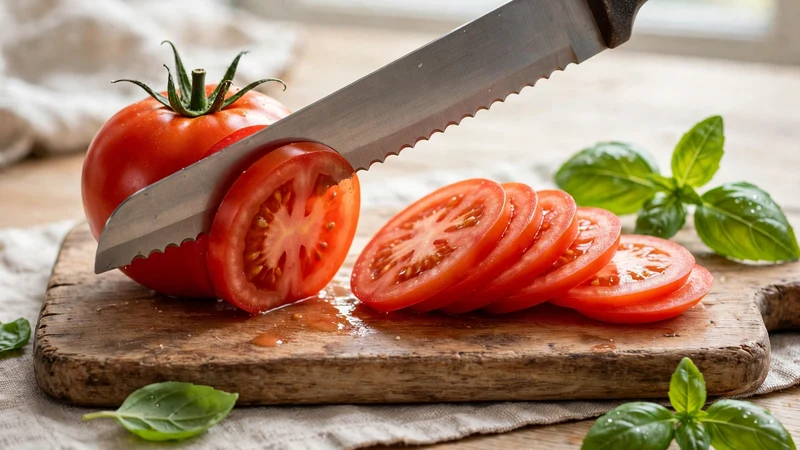
Yes, with light pressure and long sawing strokes. The serrations grip tomato skin without squashing the flesh, and they cut soft cake layers without tearing. Use a clean, dry blade, let the teeth do the work, and wipe the blade between cuts for neat slices.
Is an offset bread knife better for sandwiches?
Yes, for many sandwich makers. The raised handle keeps your knuckles above the board, so you can finish each cut without lifting or tilting the loaf. That helps keep slices level on a standard board. For very wide sourdough, a longer straight blade may still be better.
How do I cut sourdough without crushing it?
Start with a sharp, long serrated blade and a stable board. Place the loaf flat, rest the blade on the crust, and use light pressure with long, steady sawing strokes. Let the serrations cut, rather than pressing down, and turn the loaf as needed to keep slices even.