
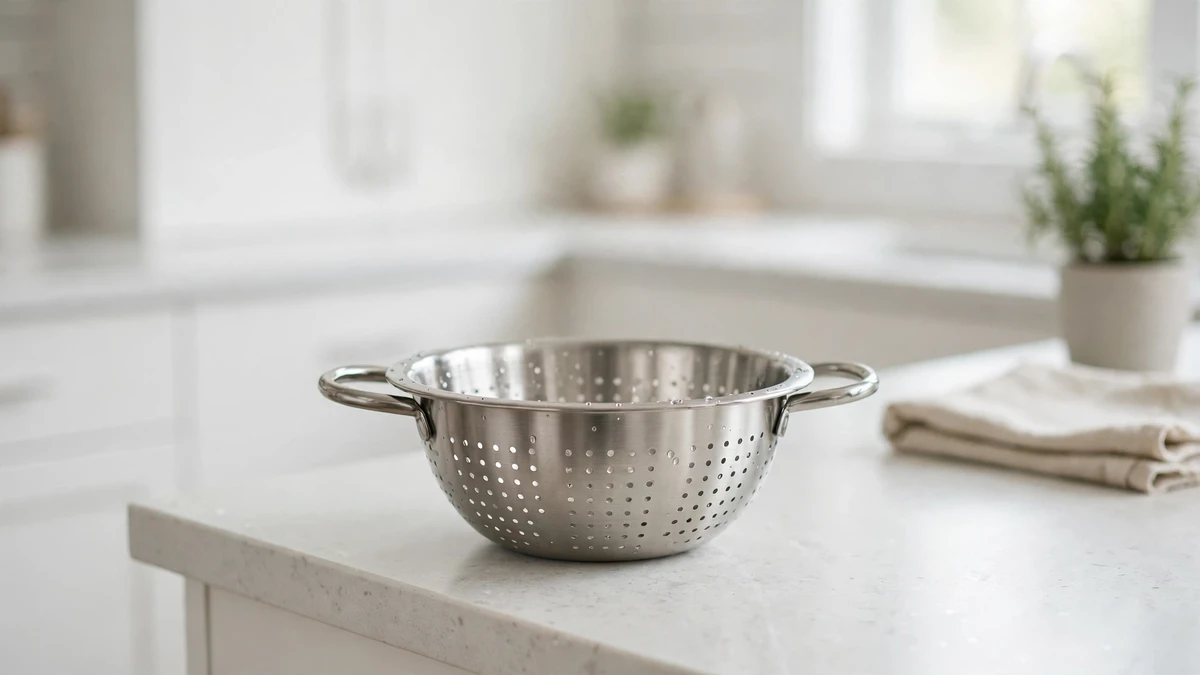
Finding the best colander for small kitchens starts with fit, not size alone. A good colander should sit safely in a small sink, drain fast, and store without crowding a cabinet.
This guide is based on research into current listings, product specifications, and buyer feedback. It is not a hands-on test report. Prices change often, so use the price bands below as a guide and check the linked listing before you buy.
Every pick here is a colander or strainer for draining, not a salad spinner and not a steamer basket. Each one suits a small sink, and several nest or collapse for storage. For matching cookware, see our guide to the best cookware set for small kitchens.
Quick Look
Use this short list to narrow the field, then read the full pick for the details that matter in a small kitchen.
- Best for: Everyday draining: OXO Good Grips Colander
- Best for: Fine draining: Bellemain Micro-Perforated Colander
- Best for: Tiny storage: Zulay Kitchen Colander
- Best for: Stainless durability: KitchenAid Colander
- Best for: Over sink draining: Farberware Colander
- Best for: Small batch rinsing: LiveFresh Stainless Colander
How We Picked
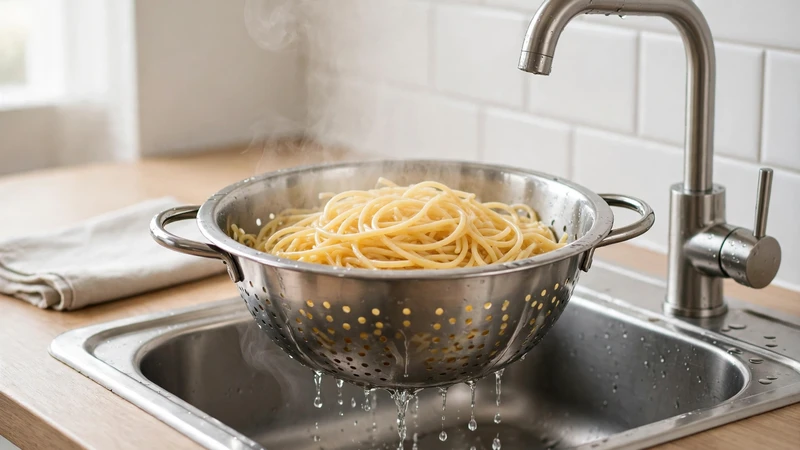
We looked for colanders with a small sink fit, fast draining holes, stable feet or handles, and strong current buyer feedback. We favored models rated 4.3 stars or higher with many ratings, and models that remain popular in current buyer lists.
We left out salad spinners, steamer baskets, and very large stock pot strainers. A small kitchen needs a colander that can drain a pot of pasta without tipping, rinse vegetables without losing small pieces, and store in a tight cabinet. A good skillet pairs well with a small colander, as in our guide to the best stainless steel skillet for small kitchens.
1. OXO Good Grips Colander
The OXO Good Grips Colander is a simple everyday strainer with non slip handles and a stable base. It drains pasta and vegetables fast, and its size suits a small sink without tipping.
- Capacity: 3 quarts
- Key features: Non slip handles, stable feet, fast draining holes
- Material: Plastic with non slip grips
- Dimensions: Small sink friendly size for a compact kitchen
- Power: No power needed, manual draining
- Who it’s for: Someone who wants a reliable everyday colander for pasta and vegetables.
- Who should skip: A cook who wants stainless steel or a very fine mesh for rice.
- Pros: Easy grip, stable base, and a size that fits a small sink.
- Cons: Plastic can stain with tomato sauces over time.
2. Bellemain Micro-Perforated Colander
The Bellemain Micro-Perforated Colander uses tiny holes to drain fast while keeping small foods in place. It works well for rinsing rice, quinoa, and vegetables, and its handles stay cool to touch.
- Capacity: 3 quarts
- Key features: Micro perforated holes, sturdy handles, self draining base
- Material: Stainless steel
- Dimensions: Small sink friendly size for a compact kitchen
- Power: No power needed, manual draining
- Who it’s for: A cook who rinses small grains and vegetables often.
- Who should skip: Someone who wants a light plastic colander for very large pasta batches.
- Pros: Fine holes, sturdy steel, and good small food retention.
- Cons: Steel is heavier than plastic when full of pasta.
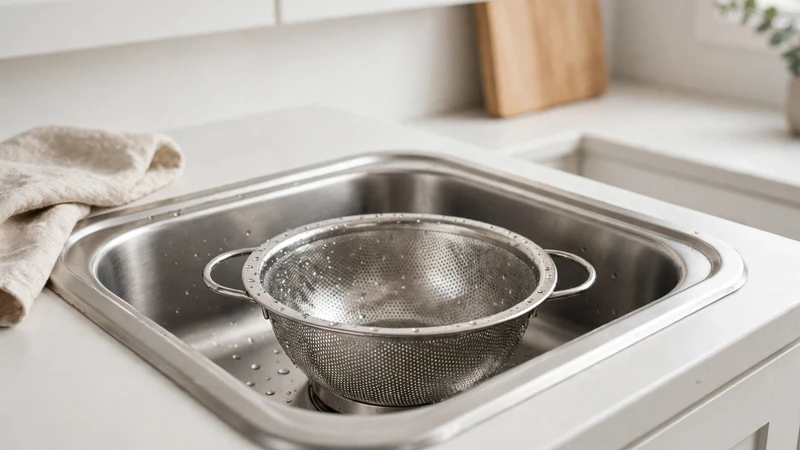
3. Zulay Kitchen Colander
The Zulay Kitchen Colander collapses flat for storage, which helps a lot in a small apartment cabinet. It expands for draining, then folds down so it does not crowd plates or pans.
- Capacity: Medium collapsible size for everyday draining
- Key features: Collapsible design, over sink use, easy storage
- Material: Silicone and plastic parts
- Dimensions: Compact when folded, small sink friendly when open
- Power: No power needed, manual draining
- Who it’s for: Someone with very little cabinet space who still drains pasta often.
- Who should skip: A cook who wants a rigid steel colander for heavy loads.
- Pros: Folds flat and stores in a narrow space.
- Cons: Folding parts need care to keep the shape stable.
4. KitchenAid Colander
The KitchenAid Colander is a stainless steel strainer with a stable base and sturdy handles. It drains quickly, resists stains, and suits a small sink for pasta, vegetables, and rinsing.
- Capacity: 3 quarts
- Key features: Stable base, sturdy handles, fast draining holes
- Material: Stainless steel
- Dimensions: Small sink friendly size for a compact kitchen
- Power: No power needed, manual draining
- Who it’s for: A buyer who wants a durable steel colander for daily use.
- Who should skip: Someone who wants the lightest possible colander for a weak grip.
- Pros: Durable steel, easy to clean, and stable in the sink.
- Cons: Steel can feel heavy when full.
5. Farberware Colander
The Farberware Colander expands over the sink, so it can drain pasta without taking sink space for a bowl. It adjusts to different sink widths, which helps in a small kitchen with a narrow sink.
- Capacity: Expandable over sink size for everyday draining
- Key features: Expandable arms, over sink use, stable grip
- Material: Plastic with metal parts
- Dimensions: Small sink friendly when adjusted to a narrow sink
- Power: No power needed, manual draining
- Who it’s for: Someone who wants to drain pasta over the sink without a separate bowl.
- Who should skip: A cook who wants a simple bowl style colander for rinsing in the sink.
- Pros: Saves sink space and adjusts to sink width.
- Cons: It needs a sink rim that suits the expandable arms.
6. LiveFresh Stainless Colander
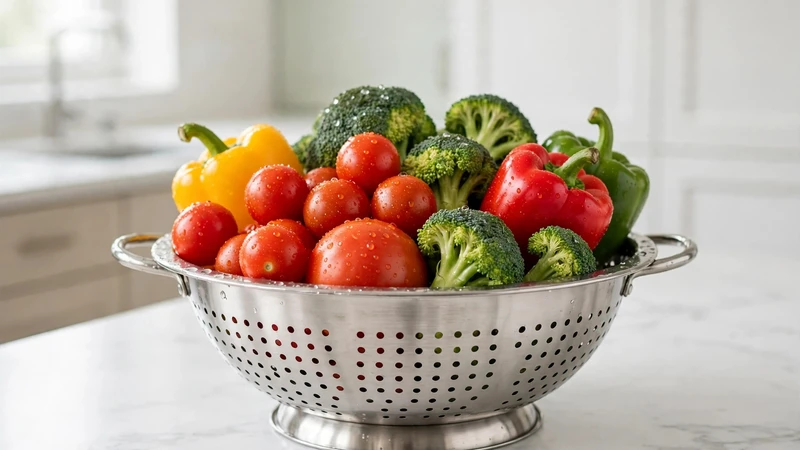
The LiveFresh Stainless Colander is a fine mesh strainer for small batch rinsing. It suits berries, quinoa, and small vegetables, and its small size stores easily in a tight cabinet.
- Capacity: 7-5/8 inch fine mesh strainer size
- Key features: Fine mesh, sturdy handle, easy rinsing
- Material: Stainless steel mesh
- Dimensions: Compact size for a small sink and tight storage
- Power: No power needed, manual draining
- Who it’s for: Someone who rinses small foods and wants a compact strainer.
- Who should skip: A cook who needs a large colander for a full pot of pasta.
- Pros: Fine mesh, compact size, and easy storage.
- Cons: Too small for large pasta batches.
Buying Guide
Start with sink size. Measure the width and depth of your sink, then choose a colander that sits inside it without tipping. A 3 quart size suits most small sinks, while a collapsible or expandable model helps when storage is tight.
Look at hole size next. Large holes drain pasta fast, while micro perforated holes keep rice and small vegetables from slipping through. A stable base or non slip handles matter more than a fancy shape when you pour a heavy pot.
Price bands are simple here. Budget models cover basic draining well, mid range models add steel or better handles, and premium models focus on durable steel or clever storage. Prices change, so compare the current listing rather than relying on an old price. For maker details, see OXO.
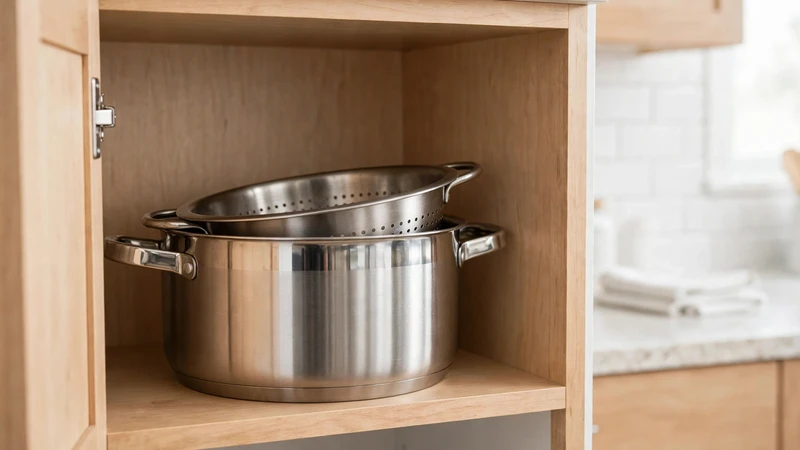
For storage, nest a small colander inside a larger bowl, or choose a collapsible model that folds flat. If you prep vegetables often, a compact chopper can share the same prep space, as in our guide to the best vegetable chopper picks for meal prep.
The Verdict
For most small kitchens, the OXO Good Grips Colander is the safest first pick because it is simple, stable, and easy to use every day. If you rinse small grains often, the Bellemain steel colander is a strong next choice.
Choose by sink fit first, then by hole size and storage. Any of the six picks above can handle a weekday pasta night, and the best one is the one that drains fast and stores without a fight.
Frequently Asked Questions
What size colander fits a small sink?
A 3 quart colander usually fits a small sink well. Measure sink width and depth first, and choose a model with a stable base so it does not tip when you pour a heavy pot.
Are collapsible colanders good for small kitchens?
Yes, collapsible colanders fold flat for storage, which helps in a tight cabinet. They work best for everyday pasta and vegetables, while a rigid steel colander suits heavier loads.
How do I stop small foods falling through a colander?
Use micro perforated holes or a fine mesh strainer for rice, quinoa, and berries. Large holes drain pasta fast but can let small foods slip through, so match hole size to the food.
Is stainless steel or plastic better for a colander?
Stainless steel is durable and resists stains, while plastic is lighter and often cheaper. Choose steel for daily heavy use, and plastic when weight or budget matters more.
Can a colander sit over the sink?
Yes, some colanders expand over the sink or rest on its rim. Check that the arms or rim fit your sink width, and keep the colander stable before you pour hot water.
How do I clean and store a colander in a small kitchen?
Rinse it right after use, wash with soap, and dry it fully before storage. Nest it inside a bowl or fold a collapsible model flat so it does not crowd a cabinet.