
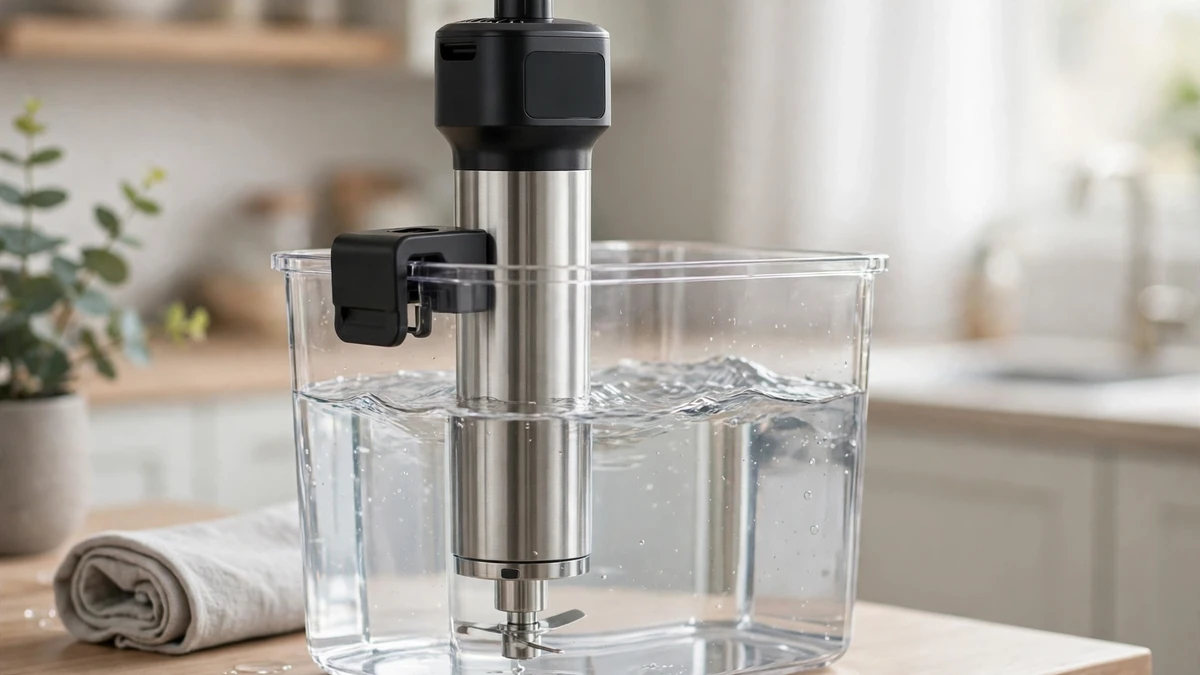
If you are searching for the best sous vide machine for small kitchens, a slim stick circulator is the smartest place to start. It clips to a pot you already own, stores in a drawer, and cooks steak, chicken, and eggs with steady, even heat. We compared manufacturer specifications and current retailer listings to choose the six models below.
Our picks are based on published specifications, size, controls, and price band, not on sponsored placement. Prices change often, so check the current price on Amazon before you buy. If you buy through a link on this page, NeatlyPick may earn a commission at no extra cost to you.
For other compact cooking gear, see our guide to the best air fryer picks for small kitchens.
Quick Look
- Anova Precision Cooker Nano 2.0: Best for: smallest budgets and first time sous vide cooks.
- Anova Precision Cooker Nano 3.0: Best for: compact kitchens that want simple app control.
- Anova Precision Cooker 3.0: Best for: faster heating and everyday family cooking.
- Breville Joule Turbo: Best for: cooks who want fast results in a very small body.
- Breville Joule: Best for: precise cooking and a tiny magnetic base footprint.
- Instant Accu Slim: Best for: simple touchscreen control at a budget price.
How We Picked the Best Sous Vide Machine for Small Kitchens
We ranked each circulator by footprint first. Height, clamp size, and storage matter more than extra features in a small kitchen. We then checked heating power, temperature control, pot fit, and how easy each model is to clean and store.
A stick circulator should leave room for the pot, a lid, and your hand. That is the same space test we use for the best pressure cooker for small kitchens.
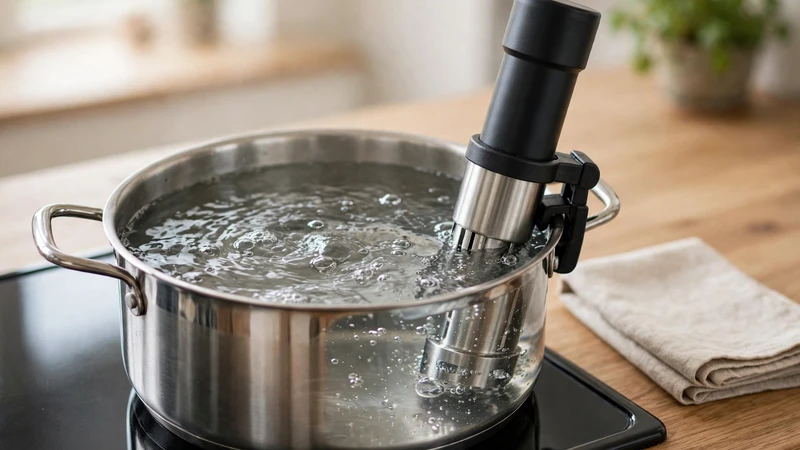
Anova Precision Cooker Nano 2.0
The Nano 2.0 is the smallest Anova in this guide, and it is easy to see why it suits a tight counter. It clips to most pots, runs quietly, and stores in a drawer when dinner is done. Bluetooth control keeps the body simple, while onboard controls cover basic cooks without a phone.
- Size: 12.8 inches tall with a slim stick body.
- Control: Bluetooth app control plus onboard controls.
- Fit: Clips to most standard pots and containers.
- Price band: Budget.
- Who it is for: Beginners and cooks with very little storage space.
- Who should skip: Cooks who want WiFi control from outside the home.
- Pros: Very compact body that is easy to store.
- Cons: No WiFi control for remote start or monitoring.
See current pricing: Check Price on Amazon.
Anova Precision Cooker Nano 3.0
The Nano 3.0 keeps the same compact idea, but adds a cleaner display and a more modern feel. It still fits small pots, and its slim shape leaves counter space for prep. For a small household, it is a balanced step up from the older Nano without moving to a larger body.
- Size: 12.8 inches tall with a slim stick body.
- Power: 800 watts for steady heating in small pots.
- Control: App control with a clear onboard display.
- Price band: Budget to mid-range.
- Who it is for: Small households that want a modern compact circulator.
- Who should skip: Cooks who heat very large containers often.
- Pros: Compact size with a clear, simple display.
- Cons: Less power than larger Anova models.
See current pricing: Check Price on Amazon.
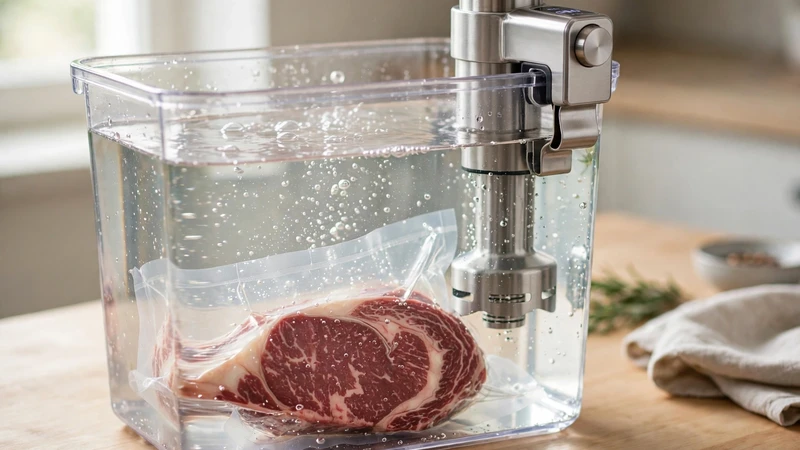
Anova Precision Cooker 3.0
The Anova Precision Cooker 3.0 is the workhorse pick for cooks who sous vide often. Its higher power heats water faster, which matters when you cook after work. WiFi control lets you start or check a cook from another room, and the clamp fits a wide range of pots.
- Size: Compact stick body that fits most pots.
- Power: 1100 watts for faster heating.
- Control: WiFi app control plus onboard controls.
- Price band: Mid-range.
- Who it is for: Regular sous vide cooks who want speed and WiFi.
- Who should skip: Cooks who only sous vide once in a while.
- Pros: Fast heating with flexible WiFi control.
- Cons: Slightly larger than the Nano models.
See current pricing: Check Price on Amazon.
Breville Joule Turbo
The Joule Turbo is built for speed in a very small package. Its short, slim body fits pots that taller circulators cannot, and it heats water quickly for weeknight cooks. App control is the main way to set temperature, so this pick suits cooks who are comfortable using a phone in the kitchen.
- Size: Short slim body for small pots.
- Power: 1100 watts for fast heating.
- Control: App control with precise temperature settings.
- Price band: Mid-range to premium.
- Who it is for: Busy cooks who want fast, precise results.
- Who should skip: Cooks who prefer full onboard controls.
- Pros: Very small body with fast heating.
- Cons: App based control with limited onboard display.
See current pricing: Check Price on Amazon.
Breville Joule
The original Joule remains a strong small kitchen choice because it is tiny, quiet, and precise. A magnetic base helps it sit flat in steel pots, and its slim shape stores easily in a drawer. It is app controlled, which keeps the body clean and simple, but it needs a phone for most settings.
- Size: 11 inches tall with a very slim body.
- Power: 1100 watts for steady heating.
- Control: App control with a magnetic base.
- Price band: Premium.
- Who it is for: Cooks who want the smallest precise circulator.
- Who should skip: Cooks who want to set temperature on the device alone.
- Pros: Tiny footprint with precise temperature control.
- Cons: Needs a phone app for most controls.
See current pricing: Check Price on Amazon.
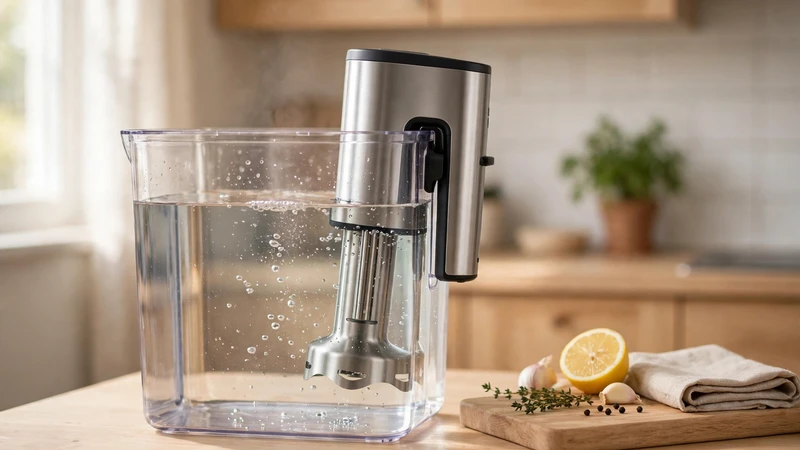
Instant Accu Slim
The Instant Accu Slim is a straightforward budget pick with a touchscreen that many cooks find easy to learn. It clips to a pot, holds a steady temperature, and does not demand an app for basic cooks. For a first circulator, it keeps the process simple and the price in the budget band.
- Size: Slim stick body for standard pots.
- Power: 800 watts for small to medium pots.
- Control: Touchscreen controls on the device.
- Price band: Budget.
- Who it is for: Beginners who want simple onboard controls.
- Who should skip: Cooks who want WiFi or app recipes.
- Pros: Easy touchscreen control at a low price.
- Cons: Fewer smart features than app based models.
See current pricing: Check Price on Amazon.
Buying Guide for a Small Kitchen Sous Vide Machine
Start with pot fit. Measure your tallest pot, then check the circulator height and the minimum water level. A short circulator gives you more pot choices, while a taller model may need a deeper container. A lid or cover also cuts evaporation during long cooks.
Next, decide how you want to control temperature. Onboard controls suit cooks who want a simple start button, while app control suits cooks who like recipes and remote checks. For food safety basics and sous vide guidance, see the Anova sous vide guides.
Finally, plan storage. A slim stick that fits a drawer will get used more than a bulky unit that lives in a cabinet. Check the clamp, the cord length, and whether the body is easy to wipe clean after each cook.
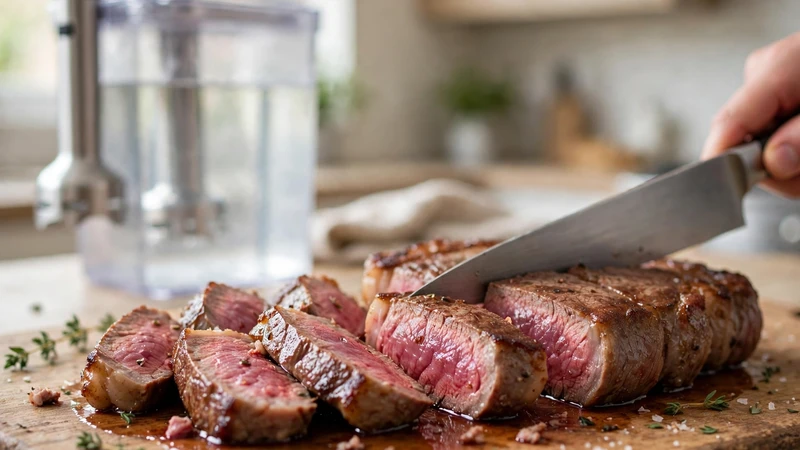
The Verdict
For most small kitchens, the Anova Precision Cooker Nano 2.0 is the easiest first buy because it is tiny, simple, and budget friendly. If you cook often and want faster heating, step up to the Anova Precision Cooker 3.0 or the Breville Joule Turbo. For more compact cooking ideas, see our guide to the best mini food processor picks for small kitchens. For grilling, check doneness with our meat thermometer picks.
Frequently Asked Questions
What size pot do I need for a sous vide machine?
Most stick circulators work with a standard stock pot or a deep saucepan. Check the minimum and maximum water levels in the manual, and leave room for the food bag so water can move freely around it.
Can I use a sous vide machine in a small kitchen?
Yes. A slim stick circulator clips to a pot you already own and stores in a drawer, so it needs no extra counter appliance. A lid helps reduce evaporation and keeps the setup tidy.
Is a sous vide machine worth it for beginners?
Yes, if you cook steak, chicken, or eggs often. Sous vide holds a steady temperature, which lowers the risk of overcooking. Start with a simple model and a basic recipe.
Do I need WiFi to use a sous vide circulator?
No. Many models work with onboard controls or Bluetooth. WiFi is useful if you want to start a cook or check temperature from another room, but it is not required.
How do I store a sous vide machine in a small kitchen?
Store a slim circulator upright in a drawer, a tall container, or a utensil holder. Dry the body and the clamp first, and keep the cord loosely wrapped to avoid damage.
Can I sous vide without a vacuum sealer?
Yes. Use a zip top bag and lower it slowly into water to push air out before sealing. This water displacement method works well for most home cooks.